
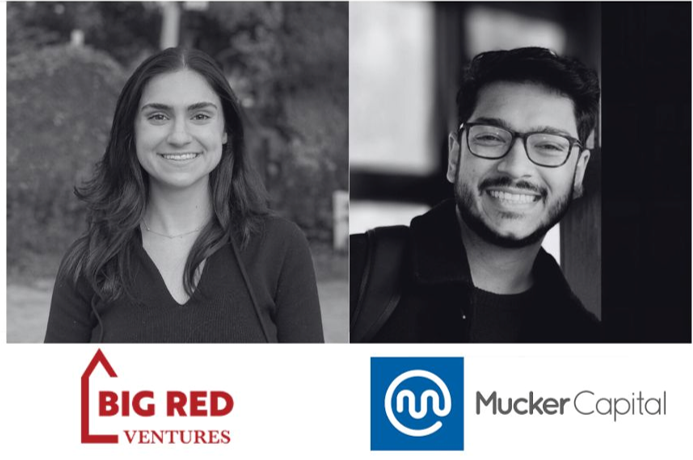
Madison: Good afternoon, Aahad, thanks again for taking the time to meet with me. We’ve been friends for a few years now and I’ve watched you assume this role of series A and seed investor at Mucker Capital, which is a software diagnostic, venture capital firm that began in Los Angeles, California. Aahad, you graduated from USC, and then you began your professional career in product and engineering. And you did that for a number of years before switching into venture capital. I would love to hear a little bit about that pivot and what you are happiest with right now.
Aahad: Yeah, so I spent my early career building products, and also leading engineering teams and product teams. I was at Speakeasy AI, which was selling ML tooling to publishers, and it started as a consumer business. I really loved it. And prior to that I was at AT&T, specifically on HBO insights. I mainly led their rapid prototyping and insight scene.
Madison: And was that in Texas or was that in California?
Aahad: So I started off my career in LA, and ended up moving to New York for the founding engineering position at Speakeasy AI. And I really loved it. After that company sold off, I had some time to think about what to do next. And I decided that venture would be interesting, particularly early-stage ventures given my operating experience. I think that one of the biggest differentiators between now and 15-20 years ago is that there are far more funds that exist now than back then. And I really wanted to join a group of all former operators who had built and scaled companies. And I also wanted to help democratize the access to venture capital. So, a lot of seed stage ventures are concentrated in San Francisco, in particular, and Mucker is one of the only national groups that are investing outside of Silicon Valley. That’s how I found Mucker, and I feel like it was a great fit.
Madison: Happy to hear that it’s a great fit and that you’re killing it. So Mucker originally began in Los Angeles, expanded into the Silicon Valley, San Francisco area, right? Then they transitioned into Austin, Texas, you mentioned offline. And now they have a pretty large New York presence. I would love to hear how the teams on the West Coast talk to the teams across the mid-Atlantic and East Coast. Can you walk me through that?
Aahad: Yeah, we’re still a small team, but a distributed team. So a lot of our team is located in LA, but we have a handful of investors in New York. We have an investor in Chicago and a couple in Austin, like you mentioned, as well as in Toronto. I think communication is very, very important, obviously, as it relates to any fund, but especially smaller funds. with a limited AUM. I think that we use a lot of tools to communicate, but the most important part of our week is the investment committee that meets every Thursday. So after a company’s founder has spoken to all of the partners and the investor on the team has done their diligence, we come together every single Thursday to talk and make sure that no companies are lost in the pipeline. We ensure that all the direct intros to partners are taken care of. Regardless of who’s on what deal, it’s super important for us to discuss everything at length so we all remain up to date on progress and how to properly go about deal flow.
Madison: Oh, I would love it if you could speak about what companies you all usually look into. Mucker Capital is a software-agnostic venture capital firm, and I’m interested to hear about how being software agnostic has unfolded as your unique angle for Mucker. How does it differentiate from the so-called “general fund” or the other VC competitors, like the really, really niche and specific ones?
Aahad: I would actually argue that if you are starting a venture capital firm, you should be thesis-driven, meaning you should be niche. I think Mucker’s “niche angle” 15 years ago was the fact that we don’t invest in Silicon Valley. There’s a lot of seed stage venture capitalists concentrated in San Francisco and a little bit more broadly in the Bay Area. So that was our unique differentiator, whereas before we didn’t really take a thesis-driven approach. Now, because there are so many venture capital firms, it makes sense to use your expertise in whatever operating industry you were part of to fund those companies in that same space. We are software-agnostic because we can rely on our track record. And everybody on the team likes investing in different tooling and companies as well. I actually think when you are starting a venture capital firm, if you do have the ability to do that, you should start very, very specific because that’s the way you’re going to track the best founders in that space.
Madison: And that’s a great segue into my next question, which is, do you have any recommended best practices for emerging venture capital firms, especially breaking into the New York City environment? You just mentioned that having a thesis around which you center your firm and the team that you construct, that’s a really, really great piece of advice. In New York City, in particular, it can be a really tough city to start out in. Healthcare is massive, healthcare technology is in a mini boom, and a variety of software and hardware spaces, I think, are also really massive. Is there any other advice that you would give to those searching to raise a fund or to expand upon their existing small fund?
Aahad: Yeah, I completely agree with that. I think there are both a large number of venture capital firms now, but also a lot of startups. And I think the way you win in venture is by obtaining proprietary deal flow. And the way you do that is ultimately by building relationships. Venture is a job about relationships. And especially if you are a pre-seed or a seed fund, specifically an early-stage fund, I think you should be focused on these high operating founders that could potentially leave large companies or large startups, like Open AI or anthropic or other high performers in any industry. Ultimately, that is how you’re going to win. And I think it’s super important to really embed yourself in the city that you’re in. So,, go to events, make sure you’re talking to a lot of people, become really plugged into the university networks, et cetera. So, I think as soon as operators see you as an asset, they’re going to want to talk to you. And I think that is how you accrue opportunities to be able to demonstrate your value.
Madison: Great recommendations, Aahad, thanks. To close this out, I have two questions left. The first of which is, “to what will you attribute your eventual success in the industry?” Obviously you’ve been in the VC space for a number of years. You’re hoping to continue in this space. What can you say was a big supporter or guide when you were first breaking into the venture capital realm?
Aahad: Yeah, my managing partners were super supportive. In my first year at Mucker, I worked exclusively as chief of staff for our managing partners, just learning the ropes and understanding how venture worked, how the business model worked, et cetera. I think after that, when I joined the seed/series A investing team, I had to be really plugged into the ecosystem, similar to the answer that I gave before, which is, you know, to just develop really deep relationships with builders, people who are building side projects, or going to Hackathons, since maybe their company isn’t even fully like productized yet. I think building those relationships is probably the most important thing. And again, that’s ultimately how people win ventures.
Madison: And my final question is, are you partaking right now in any fun or interesting investments? If anything comes to mind, can you share it?
Aahad: Yeah, we just made an investment that I sourced, which is cool. So, for context, we were the first investors in Honey, which is an ecommerce checkout tool.
Madison: You’re kidding. Awesome. We all use Honey.
Aahad: Yeah, we don’t realize it. But exactly. We all use Honey. And what’s really interesting is that 15 years ago, Honey actually didn’t have really great market penetration in India. And that was just buyer habits, trends with how people were shopping. A lot of shopping in India wasn’t done on the desktop or online. I think now, as shopping on mobile devices is getting more prevalent in India, that requires some kind of solution for coupons and discounting, with so many users opting for a mobile-first approach. So we invested in a company called Zave, Z-A-V-E, that is doing something similar, where it’s scouring the web for deals. So think like, hey, I’m gonna order something on Uber Eats or order groceries or whatever, it gets you the best price. And it ultimately ends up saving people lots and lots of money. And now they are part of our accelerator program and I’m super excited for both the founders, and I know they’re gonna build a really successful company.
Madison: That is super, super exciting to hear. Aahad, thank you so much for your time!