
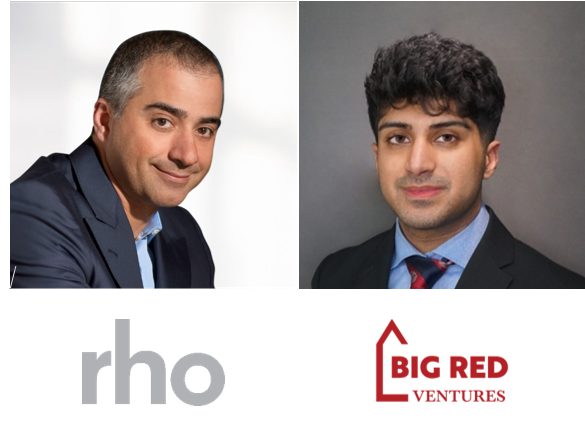
A Conversation with Habib Kairouz, Managing Partner at Rho Capital Partners
Khizar Jaffry: To start, would you mind sharing a little bit about your experience, especially your time at Cornell, how you are affiliated today, and how your career progressed into your current role?
Habib Kairouz: Sure. I am originally Lebanese and I grew up in Beirut through high school. I came to the U.S. and went to Cornell, where I got a dual degree in civil engineering and economics. I worked briefly and then went straight to business school at Columbia and got my MBA there. After business school, I worked in New York and then joined Rho in 1993. I have been here for over 30 years.
I have kept a very strong affinity with Cornell. I have been involved in a number of initiatives, including most recently serving as chairman of the Advisory Committee for the Runway Program. I also have three kids who went to Cornell, so it has become a strong family legacy.
Khizar Jaffry: What early experiences and lessons shaped your path into technology investing? And what from your time at Cornell shows up in your investing today?
Habib Kairouz: Let me start with Cornell. I was a dual degree, engineering and economics. I have a strong passion for technology and the potential it has to impact people’s lives. But through economics, I also developed a strong view that technology for the sake of technology does not cut it. It has to be accompanied by a strong business model.
Part of what we do at Runway is help postdoc students who are deep technologists commercialize their research into companies that can generate revenues and profits. That concept has stayed with me.
In terms of lessons, I joined the venture industry in 1993, right when the internet was being commercialized. There was a lot of innovation and value creation, and then we all saw the exuberance and the bubble in 1999 and 2000, followed by the bust. The lesson I draw is that when you have a major new technology cycle, it is typically followed by exuberance and craziness, and you have to be very careful navigating that phase because that is when people can create real damage.
What I am seeing today with AI as the next wave of innovation feels very similar to what I saw in the early internet wave. There will be a lot of innovation over the next two to three decades, but I also see causes for concern with valuations and the amount of capital chasing similar plays.
Khizar Jaffry: You mentioned valuations being inflated in the current market. Is it the multiples, or the overall analysis that feels inflated?
Habib Kairouz: It is no secret that valuations of some leading AI companies, public and private, are off the charts for companies that are very young. Some of these valuations will turn out to be cheap in hindsight, but I believe many will turn out to have been way off.
Those valuations are being ascribed not to where companies are today, but to what the potential will be in the future. And that potential depends on the rest of the world following what these companies are doing, which means it depends on capital availability to fund the next layer of development, and on adoption by consumers and companies. All of that will have to come in fast to generate the returns implied by some of these valuations.
Some companies will pull it off and many will not, just like the early internet wave. Google and Amazon were criticized back then, they had a tough couple of years, and they came out very strongly. In hindsight, they were cheap. But many companies created to compete with them disappeared very quickly.
Khizar Jaffry: You joined Rho in the 1990s. What convinced you this was the right seat, and how has that evolved over your time there?
Habib Kairouz: When I joined, my business partner, who has been my partner for 30 plus years, had co founded the firm and was managing a family office for a European family investing in venture capital, both in funds and directly in companies. He approached me to scale the operation, institutionalize it, bring in outside capital, and grow our direct venture activities.
The biggest thing for me was who I was partnering with. We spent time getting to know each other and understanding alignment of vision, strengths and weaknesses, and the chemistry needed to pull off what we were about to do.
The second part was the platform. Even though it had not raised outside funds yet, it had been around for over a decade and had a strong network of relationships built from investing in technology companies. It was the partner and the platform that drove my decision.
Khizar Jaffry: Rho invests across consumer and enterprise SaaS, marketplaces, and media, and spans later stages as well. How do you think about where you can be most differentiated today?
Habib Kairouz: We have always modulated our stage and sector focus based on cycles and vintage years. We have moved between early stage and late stage at different times, and we have modulated into areas like biotech and cleantech at different points as well.
Today our primary focus is a barbell strategy. On the early stage side, we are focused on the AI application layer. We are investing in companies that can ride the investments being made today in data centers and infrastructure. These application companies are just starting to show their wares and it may take a couple of years to hit an inflection point, but this is the time to invest.
We are not chasing some of the big valuations in consumer chatbots or data center plays. It is a different set of investment parameters.
On the late stage side, we are focused primarily on secondary transactions rather than high valuation growth equity rounds. We think there are opportunities to invest in interesting companies that have been around for a while where some investors need liquidity, and where there is a chance to reinvent the company through new growth initiatives. So it is very early stage AI applications, or late stage secondary transactions.
Khizar Jaffry: You have described building long term market leaders as requiring a patient and sometimes contrarian approach. What does contrarian look like in practice when you are deciding whether to lean in?
Habib Kairouz: Philosophically, if you follow everybody else in the market, you are going to generate median returns. If you want outsized returns, you have to think differently, and sometimes in a contrarian way.
In the early days, people would tell you they wanted to back seasoned entrepreneurs, proven entrepreneurs, gray hair, and they wanted them fully invested in the company. I had a view that every successful entrepreneur was a first time entrepreneur at some point. I backed quite a few first time entrepreneurs and young people. Many did not make it, but those that did generated outsized returns.
Another example was secondary transactions. Back then, most capital had to be primary and people frowned upon early secondary for founders. I encouraged founders to sell a small portion over time, for example 5 percent in a Series B and another 5 percent later, so they could change their lifestyle with success and realign risk return with investors. If founders take some chips off the table, it can realign their family situation with the investors and reduce pressure to sell too early. We did that in the late 90s, which was unheard of at the time.
Khizar Jaffry: What outcomes are you most proud of in your portfolio, and what patterns do you now prioritize that you did not appreciate early in your career?
Habib Kairouz: I am mostly proud of companies we invested in that I still see out there today. Companies that generated long term products and survived consolidation waves where a large acquirer buys a venture backed company and the product disappears over time. You still see companies like Dashlane, the password management company, Intralinx, and Everyday Health, where the brands survived and became real businesses.
In terms of patterns, one big lesson from the internet boom bust cycle is that too much capital destroys returns. I have grown very wary of it. When I see too much capital chasing a new thesis, sector, or subsector, I tend to pull back. I have seen that story happen over and over again.
Khizar Jaffry: How does your ticket strategy change with your barbell strategy?
Habib Kairouz: What has changed is where we put that late stage capital. We used to raise one multi stage, multi sector fund and build positions from small to larger over time. Today we have divided strategies into early stage versus late stage. Early stage deploys most capital from seed to Series B. Late stage today is primarily secondary transactions, and not following through on some of the later round dynamics you see in the market.
Khizar Jaffry: Going back to the early stage, what signals create conviction quickly? And what red flags look small early but become fatal later?
Habib Kairouz: In maybe 70 percent of cases where I invest, I walk out of the first meeting thinking this looks good, and the diligence process is to make sure I am not missing something.
It always starts with the team. You look at the founder or co founders and ask: Do they have passion for what they are doing, or are they just trying something to see if it becomes a business. Do they have the aggressiveness to walk through walls to convince customers to buy from a company that has never sold to anyone before. Do they have the big vision to build an industry defining company rather than a lifestyle company. Do they have charisma, which matters not only to convince customers but to convince team members to join.
Red flags are if I see confrontation in the first meeting or pushback on questions, it is a red flag because if that is what I see in the first meeting, it is only going to get worse in board meetings. If I see stubbornness about listening to the market and adapting, that is also a problem. If someone is too salesy without substance, that is another red flag. A showstopper is lack of ethics.
Khizar Jaffry: What type of board member would you describe yourself as? And how do you think about balancing founder confidence with receptiveness?
Habib Kairouz: At the end of the day, we are investing to partner with entrepreneurs. We are not giving money blindly, and we are not asking them to work for us. We are putting capital in so we can create something better together than individually.
As a board member, I view myself as there to help, not to run. There is a fine but solid line into micromanagement that I do not want to cross. I rely on the team to run the business, and I am there to provide a view of the forest rather than the trees.
We see many companies every month, so we can bring insight from what we see succeed or fail elsewhere, and relay that in board meetings. I am there to help with recruiting, to open doors to customers, and to bring investors for follow on rounds. We have long standing relationships and we know who likes what types of companies, who are good board members, and who to avoid. But at the end of the day, my job is to opine and give my view, not to force management to do anything. If they do not believe in it, it is not going to work.
Khizar Jaffry: What advice would you give founders raising in the current environment to elevate the quality of investor conversations?
Habib Kairouz: Put a clear, concise pitch together. There are a lot of checklist items that should be in every pitch without elaborating too much, because the attention span for the first pitch is limited.
Figure out warm intros into the venture community. VC firms get thousands and thousands of business plans every year, and there usually has to be a reason for a plan to go to the next phase, which is a meeting. A warm intro from someone the firm knows and trusts goes a long way.
Have a strong team at the table from the start. The stronger the team, the more likely the firm is to take it to the next level.
Bring market validation. If a customer bought, or said they want to buy, or is willing to talk to investors, anything that validates the market helps rather than assuming the investor will do that work for every company.
Finally, a strong product demo goes a long way.
Khizar Jaffry: For Cornell students interested in venture, or building venture backable companies, what is the highest leverage way to build credibility quickly?
Habib Kairouz: Try to get internships, either at VC firms or at a VC backed startup. The latter is often even more interesting because it gives you a sense for what it takes to build a VC backed startup, in product management, marketing, and other roles.
We have also had interns stay involved during school on specific projects, see ongoing business plans, and some joined full time afterwards. It is a very good way to get to know investors.
Khizar Jaffry: Any last message you would want to share with future BRV students, fund managers or associates, or companies applying to BRV?
Habib Kairouz: It is a fascinating time to be in the industry. It will also be a scary time and a roller coaster ride. If someone wants to get into venture, they should go into it with that in mind, and try to partner with people who have been doing this for a while and have seen the boom and bust cycles, or people who are deep into this new wave of innovation around AI.
*The following interview has been condensed and lightly edited for clarity while staying as close as possible to Habib’s original words.